

Paneer arrives soft and yielding and leaves the pan squeaking against the teeth. Nothing was added and nothing was taken away except water, and understanding where that water went tells you exactly when to put the paneer in.
What paneer actually is
Paneer is made by heating milk and adding an acid, usually lemon juice or vinegar. The acid destabilises the casein proteins, which clump together into a solid mass and separate from the whey. Press that mass and you have paneer.
What matters for cooking is that the result is a network of linked proteins with a great deal of water held inside it. Fresh paneer is somewhere around half water by weight. That trapped water is the entire reason it feels soft.
Note also what paneer does not have: it is set with acid rather than rennet, and it is not aged. That is why it holds its shape in a hot curry instead of melting, and it is also why the only thing heat can really do to it is tighten it.
Heat makes the network shrink
Apply heat and those protein strands draw tighter together. As the mesh contracts, the space holding the water gets smaller, and the water is forced out.
You can watch it happen. Paneer simmered in a curry for fifteen minutes will have visibly shrunk, and the sauce will be slightly thinner than it was, because a good deal of what was inside the cubes is now in the gravy.
This is the same mechanism that makes an overcooked omelette dry and weeping at once, described in more detail in why you should salt the eggs last. A protein network past its setting point keeps contracting and keeps expelling water.
So it goes in last
The practical rule follows directly: build the sauce completely, taste it, get it where you want it, and only then add the paneer. Two or three minutes is enough to heat it through, and it should be a gentle heat rather than a rolling boil.
Almost every recipe that produces rubbery paneer has the cubes going in at the start and simmering along with everything else.
Recovering paneer that has already tightened
Contraction is partly reversible, which is more than can be said for most protein failures in the kitchen. Cut the paneer into the pieces you want and leave them in warm, lightly salted water for fifteen to twenty minutes. The network relaxes and takes water back on, and firm shop-bought paneer comes out appreciably softer.
Warm, not hot. Water hot enough to cook in will start the contraction again.
Storing it
Paneer left on a plate in the fridge dries from the outside in and firms within hours. Keep it submerged in water in a covered container and change the water every day. It is a small habit that makes a noticeable difference by day three.
The same protein, elsewhere
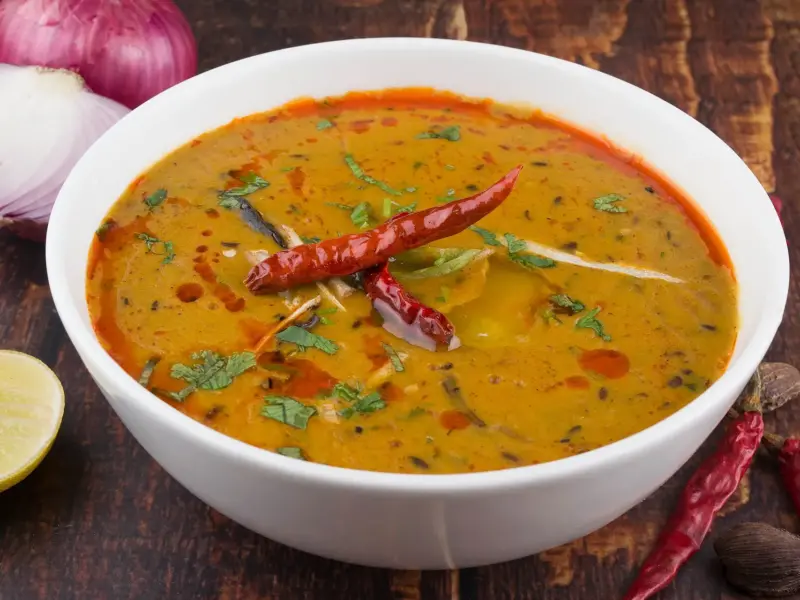
For the dal to serve with it, the tempering goes on at the end for reasons of its own. And the water-expelling problem shows up in almost identical form in the masala omelette.
Join the discussion