

The point of packing a carry-on well is not that you fit more in. It is that you stop thinking about it. A bag packed to a system means you never search for anything, never repack in a hotel room, and never stand at a bag drop rearranging in front of a queue. A week is comfortably within carry-on range for most trips, and the constraint that makes it work is deciding to do laundry once.
Start with the airline limit, not the bag
Carry-on allowances vary more than people expect. A bag that flies free on one airline is a paid gate check on another, and the low-cost carriers are the strictest. Two things to check before you buy or pack:
- Dimensions. Around 55 x 40 x 20 cm is a common full-size cabin allowance, but budget airlines often allow only a small underseat bag of roughly 40 x 20 x 25 cm without paying extra.
- Weight. Many European and Asian carriers enforce a cabin weight limit, often 7 to 10 kg. Most US carriers do not weigh cabin bags at all. If you are connecting between the two, pack to the stricter of the two.
Soft-sided bags are more forgiving in a sizer than hard shells, and a bag that is slightly under the limit is worth more than one that is exactly on it.
The one decision that makes a week fit
Pack four days of clothes and do a wash midway. That is the whole trick, and everything else is detail. A single hotel-sink wash of underwear and a t-shirt takes about ten minutes, or one laundrette visit takes an hour of a day you were going to spend walking anyway.
For a week, that means roughly: four t-shirts or tops, two pairs of trousers, five sets of underwear and socks, one warm layer, one light waterproof, and the clothes you travel in. Everything in a neutral enough palette that any top works with any bottom, which removes about half the volume most people pack.
Rolling, folding and cubes
Rolling saves a little space over flat folding and creases soft fabrics less. It is not the dramatic difference it is often claimed to be. The real gain from packing cubes is not compression either, it is that you can find things without unpacking, and that dirty clothes go back into a designated cube rather than into the general bag.
Two cubes is enough: one for clean clothes, one that starts empty and fills with worn ones. Shoes go in a bag at the bottom near the wheels, with socks stuffed inside them.
Liquids, and the rule that keeps changing
The long-standing rule is containers of 100 ml or less, together in a single transparent resealable bag of about one litre. Some airports have installed newer CT scanners that lift the restriction, but the rollout is uneven and the rules have been reversed at short notice more than once. Pack to the 100 ml rule regardless, because you cannot rely on the airport you are returning through having the same equipment as the one you departed from.
Solid alternatives remove the problem entirely: bar shampoo, solid deodorant, toothpaste tablets. They also cannot leak, which is the other reason to like them.
What earns its place
- A power bank. It must be in the cabin bag, never checked, and airlines are increasingly strict about this. Most cap capacity around 100 Wh.
- One multi-port charger. Replaces three separate plugs and one adapter.
- A packable tote or daypack. Folds to nothing, and means your cabin bag stays in the room while you go out.
- A refillable bottle. Empty through security, filled after.
- Basic medication. In original packaging, in the cabin bag.
What does not
- Just-in-case clothing. The second jumper, the smart shoes for a dinner that is not booked. If it is for a scenario you have not confirmed, leave it.
- Full-size toiletries. Almost everything is buyable at the destination for less than the hassle costs.
- More than two pairs of shoes. One worn, one packed.
- A travel towel, usually. Every hotel has towels. This is for hostels and camping only.
The bit that makes it repeatable
Keep the toiletry bag permanently packed and stored ready, rather than unpacking it after each trip. Keep the chargers in a fixed pouch that lives in the bag. Then packing for the next trip is only clothes, and it takes fifteen minutes rather than an evening. This is the actual answer to the title: you do not think about it again because most of the bag never got unpacked.
Before you book
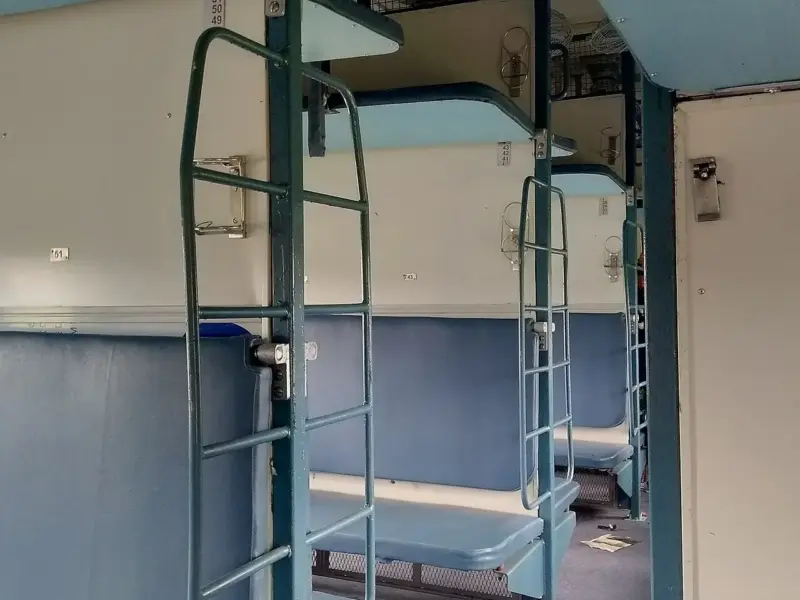
A carry-on-only trip pairs naturally with overnight train travel, where a bag you can lift is worth more than one you can fill. For a destination where you will be walking a lot with what you carry, see two days in Jaipur.

Join the discussion